Two Lessons in Civics
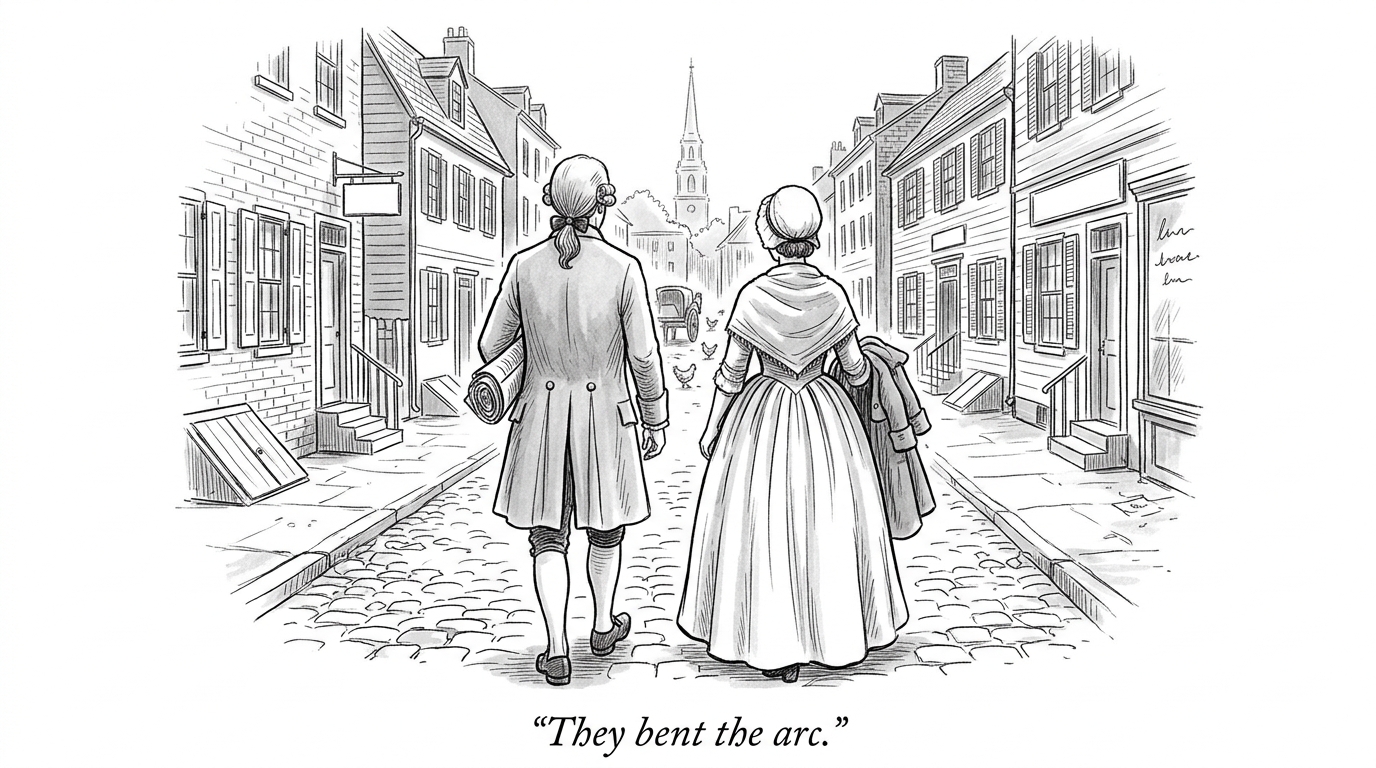
A young person watches Hamilton and feels all of it: the rush, the grief, the betrayal. Then someone asks what a Treasury Secretary does, or why the charges against him mattered, or what the Founders were arguing about, and the feeling has nothing to hold onto. The feeling is real. The civics is the part that was never handed down.
So here is the civics, told through one household, where two people taught the country two different lessons. It is not a tidy story. America has always been in conflict, and its words and its actions have never quite matched. One family shows that better than a textbook.
The man who built the system
Alexander Hamilton was the first Secretary of the Treasury under the new Constitution, which means the person in charge of the country's money. The country was heavy with debt. The national government owed money from the Revolution, and so did the states. In January 1790 he asked Congress to have the national government take over the states' war debts and fold them into one national debt.[2] He argued it was necessary to establish the country's credit and promote investment, and that the people who held the debt, a small number of wealthy citizens, would take a keen interest in the success of a country that owed them money.[2]
That one move tied the states' money to one government, and it was bitterly opposed. Northern states, whose debts were mostly unpaid, wanted it. Southern states that had already paid much of theirs did not. The deadlock broke over a dinner on June 20, 1790, hosted by Thomas Jefferson, where James Madison agreed not to block the plan in return for putting the permanent capital on the Potomac River. Congress passed the Residence Act that July and the Funding Act, which included taking over the state debts, that August. Historians doubt how much the dinner itself decided, though the meeting is not in dispute.[2]
In December 1790 he sent Congress a second plan, for a national bank that could issue paper money, keep the government's funds safe, and collect its taxes and pay its debts. Jefferson feared a bank would favor bankers over farmers, and argued the Constitution did not give the government the power to charter one. Congress passed it anyway, and President Washington signed it in February 1791.[1]
The debt plan and the bank together made one financial system for one country. The author's reading is that those moves are a large part of why the states became a nation, and Jefferson and Madison feared exactly that: Hamilton wanted the federal government to hold the bulk of the political and economic power, and they wanted it to stay with the states.[2] That fight over how much power the national government should hold runs through the rest of the country's history.
If it had failed
Imagine it had failed. Every state prints its own money and writes its own rules. How does a merchant in Philadelphia sell to a buyer in Charleston? How does a driver's license from Virginia get honored in Maryland? The 1780s, before the Constitution, were a time of widespread economic disruption and a currency that had lost its value.[1]
The Constitution answered with three rules. Congress may coin money and regulate commerce among the states. No state may coin money or issue its own bills of credit. And each state must give "full faith and credit" to the public acts of every other state.[14] The author's reading is that Hamilton's debt plan and bank were the first working machinery for those rules: one national debt and one national bank, so that a dollar in one state meant something in another. Without that machinery, the questions at the top of this section have no easy answer.
The charge, and the answer
In 1793 the House of Representatives took up a set of resolutions from Representative William Branch Giles of Virginia. A resolution is a formal statement a legislature votes on. On February 27 Giles introduced nine of them censuring the Treasury Secretary's official conduct, and the third said he had violated the Funding Act of 1790. The House defeated each one, and Madison voted with the minority.[3] The charge was mismanagement and breaking the laws that governed the debt, and the House did not agree.
The charge came back in 1797, when pamphlets accused Hamilton of speculating with public money. His answer is one of the strangest documents in American politics. He wrote his own pamphlet, published on August 25, 1797, titled Observations on Certain Documents, with a subtitle saying the charge of speculation was "fully refuted" and "written by himself."[4] To prove that the money he had paid a man named James Reynolds was not corruption, he admitted what it was. In his own draft he wrote, "My real crime is a loose connection with his wife," and said he believed husband and wife had worked together to extort money from him.[4] He published the proof himself, down to the lurid details.[13]
He chose to be known as a cheat in order to be cleared as a thief. That is a man whose words about honor and whose actions in private had come apart, and who decided which one the public should see.
The woman who read it
Eliza Schuyler Hamilton was his wife. The pamphlet was public, and so was what it said about her marriage. The record says it exposed her to humiliation.[13] Nothing in the sources I read says what she felt. The marriage endured, and it was hurt. They held in spite of the facts. What the record shows is what she did next.
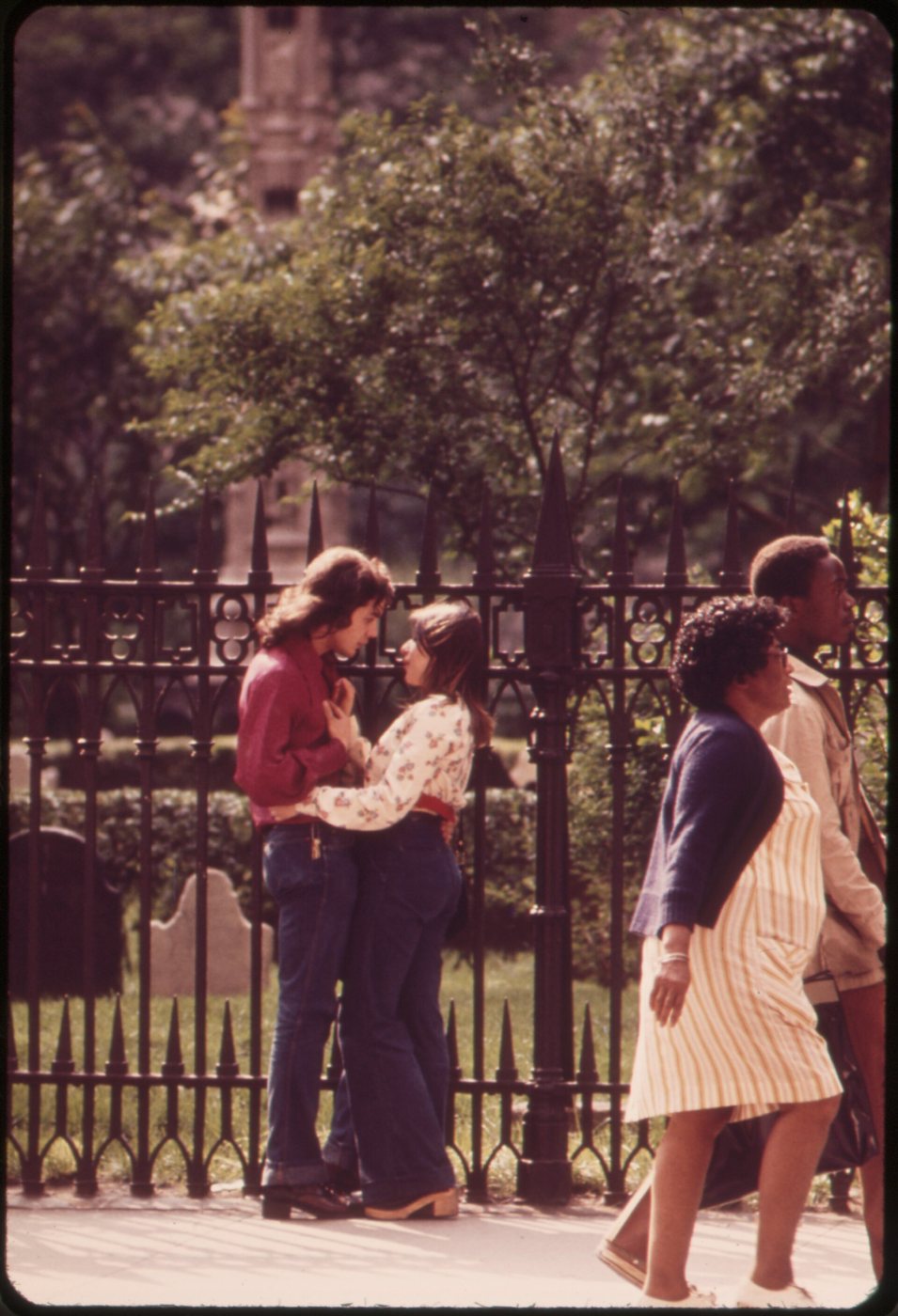
In 1806 she joined Isabella Graham, Graham's daughter Joanna Bethune, and other women to found the Orphan Asylum Society, the first private orphanage in New York City.[5] The women met on March 15, 1806, to open a home for orphan children.[6] It began as a home for six children whose widowed mothers had died. The home opened on May 1, 1806, in a rented house in Greenwich Village. Twelve children came in the first six months and two hundred by the end of the first year. By 1856 more than fifteen hundred had been housed and taught.[7] The women did the day-to-day running and most of the fundraising. Women could not vote, so a society like this was one of the few ways they could build something public.[6]
Eliza became the society's director in 1821 and held the job for 27 years. She raised money, leased property, and took responsibility for 158 children in its care.[5] The society she helped start is still working today under the name Graham Windham.[7]
She had also lost a great deal. Her eldest son, Philip, was killed in a duel at Weehawken, New Jersey, in November 1801, at nineteen. His death drove his sister Angelica to a breakdown from which she did not recover, leaving her in what was described as "eternal childhood."[8] In 1804 her husband was killed in a duel with Aaron Burr. She outlived him by fifty years.[5] She spent nearly all of that time collecting and preserving his papers and letters, and she hired assistants to organize them.[9] In 1846 she petitioned Congress to publish and preserve them.[10] The government bought them in 1849 and her son published them in 1850 and 1851.[9] The papers were the thing most likely to be burned or lost. Her caring outlasted them.
What the family did not say out loud
The same family carries the largest gap in the country's history between words and actions.
Eliza's father, Philip Schuyler, enslaved people. Between his Saratoga estate and his Albany mansion there were typically two to three dozen enslaved people at any one time, according to the National Park Service, and one account says as many as twenty-seven. The Park Service lists names that survive in the family's letters and records, among them Jacob, Harry, Peter, Cuff, Phoebe and Bett.[11]
Alexander Hamilton was among the founders of the New York Manumission Society, which sought the gradual end of slavery in the state, and he served as its secretary. The society helped open the African Free School and aided the passage of an 1799 law freeing the children of enslaved people. Yet more than half of its members owned people themselves, and a plan Hamilton helped devise for members to free their own enslaved workers went nowhere.[12]
Historians disagree about whether the Hamiltons themselves enslaved people. The historian Jessie Serfilippi, an interpreter at a New York state historic site, argues that Alexander Hamilton did, and that slavery was "essential to his identity." The biographer Ron Chernow called her research strong but questioned her central claim and pointed to Hamilton's work against slavery, saying a fuller account would have made her paper more persuasive.[12] One account says Hamilton bought and sold enslaved people for his in-laws, and possibly for his own household.[12] I will not settle that here. It is a real dispute, and the honest thing is to say so.
The orphanage Eliza helped build had its own gap. Its constitution required that orphans be educated and then "bound out," indentured to families, girls until eighteen and boys until fifteen. In 1855 it began allowing children to be placed outside New York State, and in cooperation with the Children's Aid Society it sent boys west to families, in the system now known as the "orphan train."[7] Nothing I found says what Eliza decided about that. The good she built and the harm it later did sat in the same institution.
Two lessons in civic duty
Hamilton's lesson is to build. A country is not held together by its words alone. It needs structures people can depend on: a currency that works, debts that are honored, rules that bind separate states to one government. He built them, flaws and all.
Eliza's lesson is to hold. Her marriage endured after the pamphlet.[13] She held the orphanage for decades after she helped start it, and it is still standing.[7] Building is the beginning. Holding is what keeps a structure alive after the builder is gone and after the facts are known. Neither lesson is enough alone, and a country needs people willing to do each one.
Why does this hold together? Because the arc of history is an act of will. It does not bend by itself. Someone stands on a lever. Hamilton stood on one when he pushed a debt plan and a bank through a divided Congress. Eliza stood on another when she kept building an institution for other people's children and kept his papers from being lost. The arc is what the country looks like afterward, and the lever is a person deciding. This outlet has made the argument before. Someone moves the lever shows that what gets described as "the market decided" or "momentum" is a named person's act of will on a specific day, and Who does which work looks at four ways the arc bends and one that takes a generation.[16]
Her holding reached further than she could have known. The society she helped found became Graham Windham, which today runs family foster care and adoption.[15] The author's reading is that this makes her work a root of the modern adoption system. The sources show one agency's line from 1806 to today, not that agency's place in the whole system, so that is a reading and not a finding.
What to ask
When someone tells you the Founders stood for liberty, or that the country has always been divided, ask four things:
1. What did they say, and what did they do? Put the two side by side, in the same person and in the same house.
2. Who paid for it? The enslaved people at the Schuyler estates, the children bound out to families, and the women who raised the money are all part of the bill.
3. What survived, and who kept it? Documents burn and get published. Institutions are kept by people who tend them.
4. What is still disputed? Some of this, like whether the Hamiltons enslaved people, is still argued by historians. A person who can say "that is disputed" is more trustworthy than one who cannot.
America has always been in conflict, and its words and actions have never been the same. A family can hold both at once: a man who built a financial system and a woman who held a marriage and then a home, in a household built on people nobody wrote down. The conflict is not outside the family. It is in it, as it is in the country. In the household, they held. In the country, they bent the arc. People decide, and stuff happens.
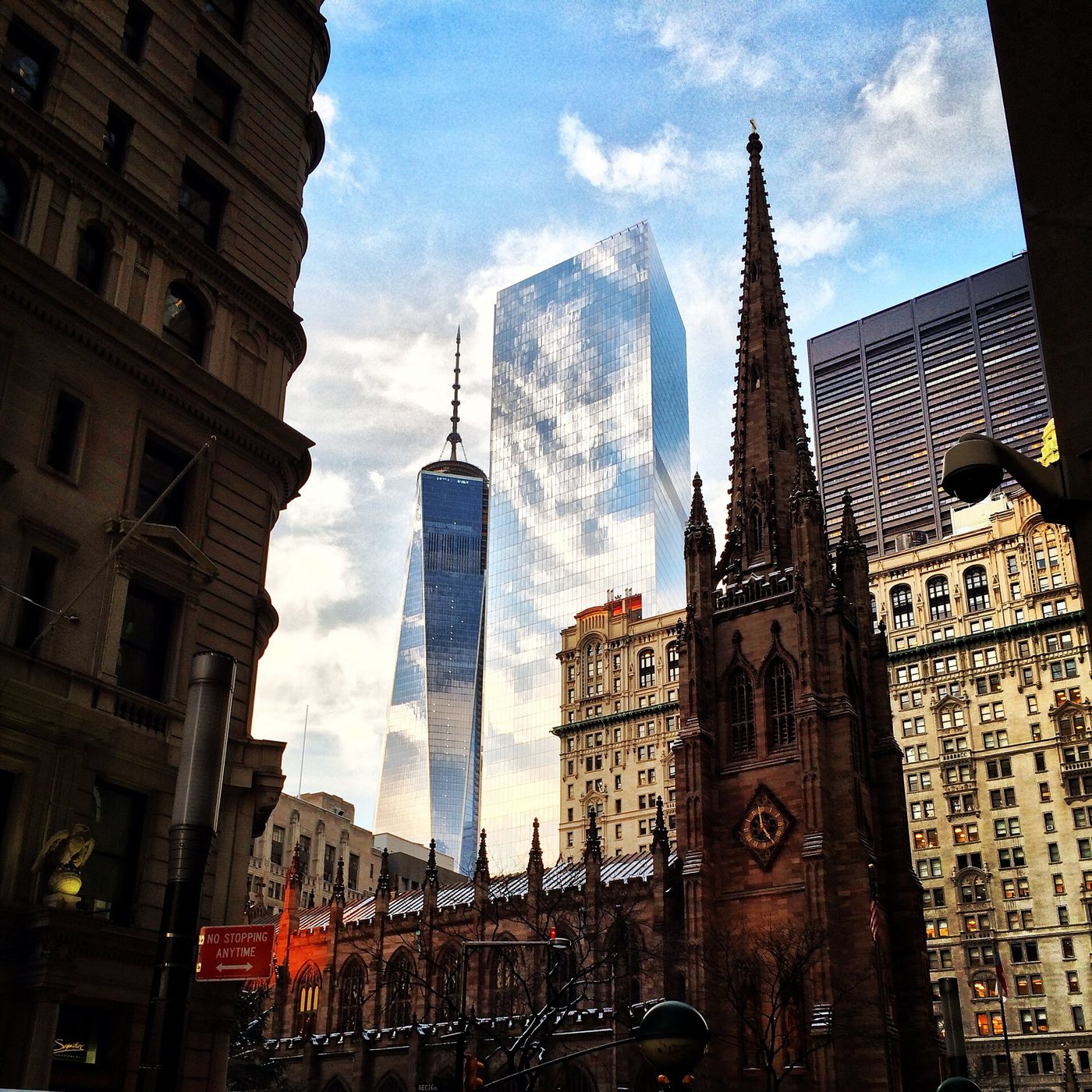
This is the author's reading of the record. The sources are listed below. Where historians disagree, the piece says so.
Sources
- Andrew T. Hill, "The First Bank of the United States," Federal Reserve History: https://www.federalreservehistory.org/essays/first-bank-of-the-us (read in full; the 1780s economic disruption and the 1790-91 bank).
- Jessie Kratz, "The Compromise of 1790," Pieces of History, National Archives, May 31, 2015: https://prologue.blogs.archives.gov/2015/05/31/the-compromise-of-1790/ (read in full; the January 1790 report, the June 20, 1790 dinner, the Residence Act and the Funding Act; the Archives notes historians are skeptical how much the dinner affected the compromise).
- "Resolutions Censuring the Secretary of the Treasury, [1 March] 1793," editorial note, James Madison Papers, Founders Online, National Archives: https://founders.archives.gov/documents/Madison/01-14-02-0412 (read; Giles introduced nine resolutions on February 27, 1793; the third asserted a violation of the Funding Act of 1790; the House defeated each, with Madison in the minority).
- Alexander Hamilton, Observations on Certain Documents Contained in No. V & VI of "The History of the United States for the Year 1796," In Which the Charge of Speculation against Alexander Hamilton, Late Secretary of the Treasury, is Fully Refuted. Written by Himself (Philadelphia: John Fenno, 1797), published August 25, 1797. Founders Online, National Archives: headnote https://founders.archives.gov/documents/Hamilton/01-21-02-0144 and draft text https://founders.archives.gov/documents/Hamilton/01-21-02-0138-0001 (read; the quoted sentence and the extortion statement are from the draft of August 25, 1797).
- National Park Service, "Elizabeth Schuyler Hamilton," https://www.nps.gov/articles/000/elizabeth-schuyler-hamilton.htm (read; the 1821 date, 27 years, 158 children); Trinity Church Wall Street, "Elizabeth Schuyler Hamilton: An Influential Trailblazer," https://trinitychurchnyc.org/stories-news/elizabeth-schuyler-hamilton-influential-trailblazer (read; Trinity dates the founding March 16, 1806, the archive and the primary source say March 15; Trinity also says she outlived Alexander by 50 years, is buried beside him, and that the orphanage survives as Graham-Windham).
- New-York Historical Society, Women & the American Story, "Benevolent Societies," with an excerpt from Joanna Graham Bethune, The Power of Faith (1816): https://wams.nyhistory.org/primary-source/benevolent-societies/ (read in full).
- Graham Windham Records, MS 2916, New-York Historical Society finding aid (NYU Special Collections), historical note: https://findingaids.library.nyu.edu/nyhs/ms2916_graham_windham/ (read in full).
- PBS American Experience, "Philip Hamilton (1782-1801)," https://www.pbs.org/wgbh/americanexperience/features/hamilton-philip-hamilton-1782-1801/ (read; the duel at Weehawken on November 23, 1801, Philip aged 19, "drove his sister Angelica mad"); Wikipedia, "Angelica Hamilton," https://en.wikipedia.org/wiki/Angelica_Hamilton (read; the breakdown, "eternal childhood"; historians debate the medical details).
- New York State Museum, "Elizabeth Schuyler Hamilton," https://exhibitions.nysm.nysed.gov/albany/bios/s/elschuyleranb.html (read; nearly fifty years collecting and preserving his papers; the government bought them in 1849 and her son published them in 1850-1851); PBS American Experience, "Elizabeth Hamilton (1757-1854)," https://www.pbs.org/wgbh/americanexperience/features/hamilton-elizabeth-hamilton-1757-1854 (read; she hired assistants to organize his papers).
- Petition of Elizabeth Hamilton to Congress, 1846, National Archives DocsTeach: https://docsteach.org/documents/document/petition-hamilton-congress (read).
- National Park Service, "Schuyler Estate," https://www.nps.gov/places/schuyler-estate.htm (read; two to three dozen enslaved people at any one time between Saratoga and Albany; the names). The "as many as twenty-seven" figure is from source 12.
- Christopher Klein, "Alexander Hamilton's Complicated Relationship to Slavery," History.com, July 8, 2020, updated February 28, 2025: https://www.history.com/articles/alexander-hamilton-slavery-facts (read; the Manumission Society, the African Free School, the 1799 law, more than half the members enslaving people, the failed plan, "as many as 27" at the Schuyler properties, buying and selling for in-laws and "possibly even his own household"). The Serfilippi and Chernow positions: "Alexander Hamilton was a slave owner, new research says," Fox News wire report, November 2020: https://www.fox7austin.com/news/alexander-hamilton-was-a-slave-owner-new-research-says (read; Serfilippi's "essential to his identity" quotation; Chernow's response, which he gave to the press). Serfilippi's paper itself has not been read.
- PBS American Experience, "Elizabeth Hamilton (1757-1854)," https://www.pbs.org/wgbh/americanexperience/features/hamilton-elizabeth-hamilton-1757-1854 (read; the affair, publicly revealed six years later, exposed Elizabeth to humiliation, "augmented by Hamilton's insistence on airing the adultery's most lurid details"; she devoted decades to his legacy).
- "The Constitution of the United States: A Transcription," National Archives: https://www.archives.gov/founding-docs/constitution-transcript (read; Article I, Section 8, coin money and regulate commerce among the states; Section 10, no State shall coin money or emit bills of credit; Article IV, Section 1, full faith and credit).
- Wikipedia, "Graham Windham," https://en.wikipedia.org/wiki/Graham_Windham (read; today's programs include family foster care and adoption).
- DoAyni and Oluwadi, "Someone moves the lever," August 13, 2026 (https://doayni.com/analysis/someone-moves-the-lever) and "Who does which work: four ways the arc bends, and one that takes a generation," August 4, 2026 (https://doayni.com/analysis/who-does-which-work): this outlet's own earlier pieces on the same theme.
- Lesekreis, "One World Trade Center and Trinity Church," photograph taken February 7, 2014, Wikimedia Commons, released under CC0 (public domain dedication, free for commercial use, no credit required; credit given anyway): https://commons.wikimedia.org/wiki/File:One_World_Trade_Center_and_Trinity_Church.JPG
- "Springtime Scene by the Fence Outside Historic Trinity Church at Broadway and Wall Street, Lower Manhattan," May 1973, photograph by Wil Blanche, U.S. National Archives (NARA 549324), public domain: https://commons.wikimedia.org/wiki/File:SPRINGTIME_SCENE_BY_THE_FENCE_OUTSIDE_HISTORIC_TRINITY_CHURCH_AT_BROADWAY_AND_WALL_STREET,_LOWER_MANHATTAN_-_NARA_-_549324.jpg (original on the National Archives' Flickr: https://www.flickr.com/photos/usnationalarchives/3952611781/).
- Alex Jodoin, small flags in a flowerpot, 2016, Wikimedia Commons file "Trinity Church, New York, United States (Unsplash)," CC0: https://commons.wikimedia.org/wiki/File:Trinity_Church,_New_York,_United_States_(Unsplash).jpg