Arm's CEO Says AI Will Cure Cancer "Within Our Lifetime." IBM Already Spent $4 Billion Proving That the Compute Isn't the Part That's Missing.
Arm CEO Rene Haas told the BBC's "Big Boss Interview" podcast that AI will help cure cancer "within our lifetime." His argument: simulating how a specific DNA marker behaves inside a cancer cell currently defeats both human researchers and machines, but feeding models enough data will eventually crack it -- more data, more compute, get there.[1] It is a claim about scale: the problem is size, and size is the one variable a chip company's CEO is positioned to keep supplying.
A cancer researcher has a direct answer, and it is not about scale
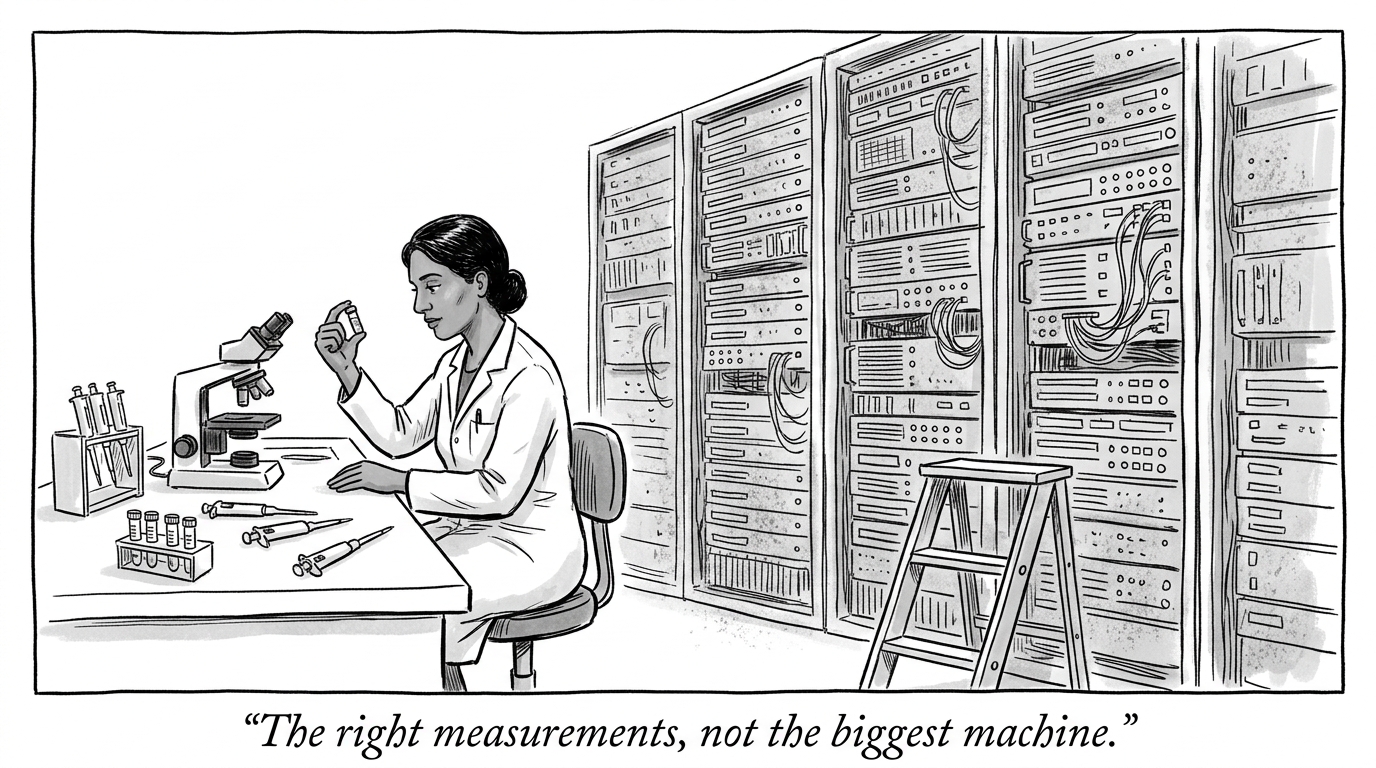
Professor Chris Bakal, of the Institute of Cancer Research in London and CEO of the AI-diagnostics company Sentinal4D, pushed back directly on Haas's framing. His point is not that AI is the wrong tool -- his own lab uses it daily. His point is that the real question was never whether to use AI, but what to feed it. His lab works from patient-sample-derived data, not internet-scraped text, and needs no giant compute facility to do it. His framing, stated as directly as Haas's: this will be "won by whoever holds the right measurements rather than the biggest computer."[2] Same technology, opposite bottleneck.
This exact argument already ran once, at industrial scale, with a verifiable outcome. IBM built Watson Health specifically to apply AI to oncology, spent more than $4 billion doing it, and had the compute and the brand to make Haas's version of the bet look conservative by comparison. It failed for the reason Bakal names, not the one Haas names: Watson was trained substantially on synthetic and limited real-world cases rather than the kind of large, representative patient data Bakal's lab insists on, and it showed -- internal documents surfaced doctors describing "multiple examples of unsafe and incorrect treatment recommendations," including the black-box-warning case.[3] IBM sold the unit in 2022 at a loss. The compute was never the constraint. The data was.
Why does this matter? A promise about AI curing disease "within our lifetime" is easy to make and expensive to disprove -- by the time it doesn't pan out, the person who made the promise has usually moved to the next headline. IBM already ran the disproof, in public, with a paper trail. Haas's version of the claim doesn't engage with why Watson Health failed; Bakal's does. The two AI-and-cancer claims in front of readers right now aren't "AI can help" versus "AI can't" -- both researchers agree it can. They're a claim about the size of the computer versus a claim about the quality of what goes into it, and only one of those claims has already been tested at $4 billion and come back with an answer.