A Failing Mill Town Needed 15 Months and $60 Million to Become One of the West's Most Desirable Destinations. One Newspaper Publisher Decided to Bet on Both Numbers Himself.
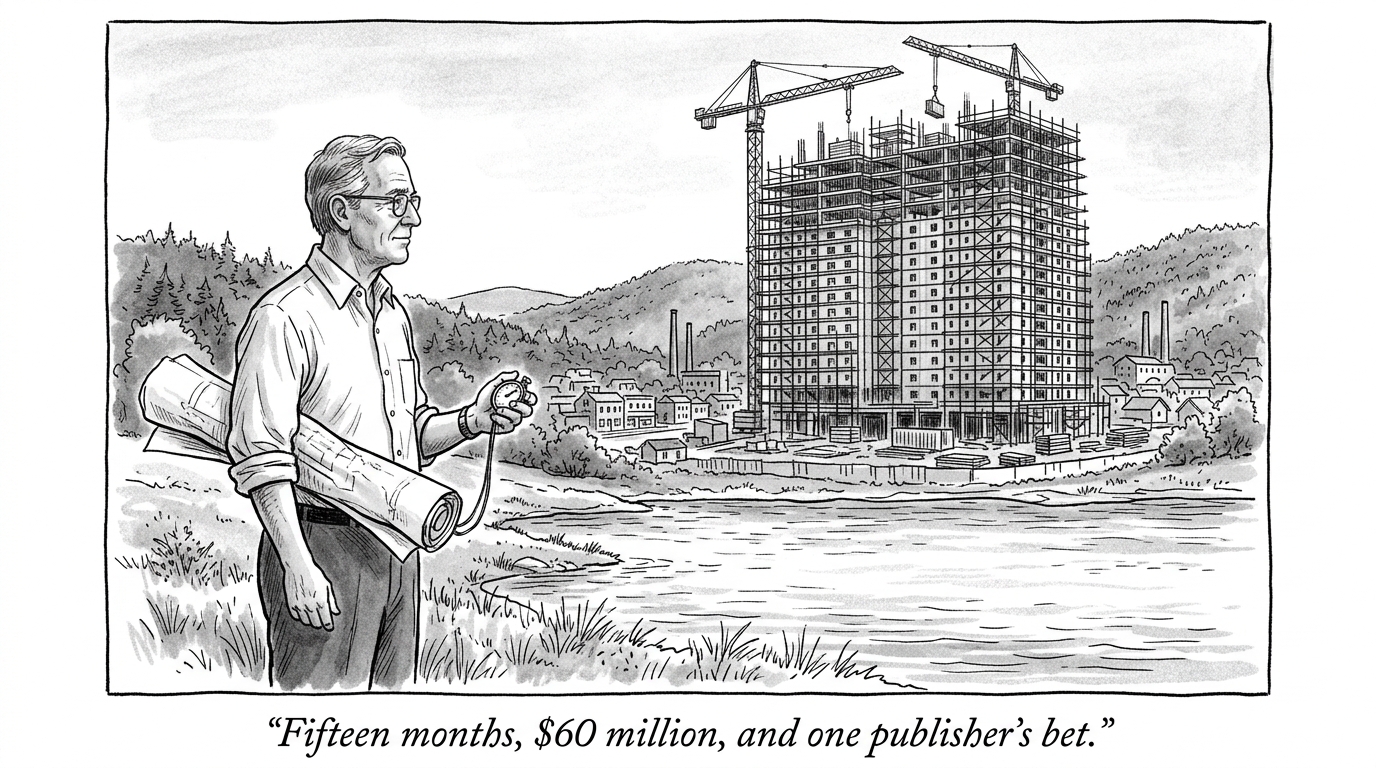
Coeur d'Alene, Idaho sits on the edge of one of the richest silver-mining districts ever found -- the Silver Valley produced more silver than almost anywhere else on Earth across more than a century of mining.[1] None of that history stopped the town from becoming a faltering mill town by the early 1980s, as mining and timber both declined and the region slid into the same recession hitting the rest of the country. What reversed it wasn't a diversified regional economic strategy. It was one newspaper publisher deciding to build an $60 million resort on the lake, on a fifteen-month deadline he set for himself.
The specific bet, on the specific timeline
Duane Hagadone, who had built a local newspaper and media business in Coeur d'Alene, unveiled The Coeur d'Alene Resort on May 4, 1986 -- an 18-story hotel on the north bank of Lake Coeur d'Alene, completed in fifteen months.[2] Fifteen months is an aggressive schedule for an 18-story building under any circumstances; doing it during a national recession, in a town whose primary industries were actively contracting, was a bet that the resort itself would generate the demand its own construction schedule assumed.
The bet kept compounding after it paid off once
Hagadone didn't stop at the resort. Five years after it opened, he built The Resort Golf Course on the site of an old mill -- literally building the town's next industry on the physical ground of its last one -- and added the Plaza Shops downtown.[3] The resort alone has served more than 5 million visitors and 22 million meals since 1986, with an estimated $2 billion in visitor spending flowing through Coeur d'Alene as a result.[3] A mining and timber town that had no obvious next act got one specifically because Hagadone built it, then kept building on top of it.
This is the same mechanism this outlet has traced in Boise (Gabe Bentz) and Missoula (Eric Siegfried): a specific person's specific, deadline-bound decision, not a diffuse regional trend, is the actual variable that explains what a place became. Coeur d'Alene's lake, its mining legacy, and its position on I-90 were all real and available to anyone. Nobody else built an 18-story resort on a fifteen-month deadline in the middle of a recession. Hagadone did, and the town's entire post-mining identity traces back to that one decision more directly than to any of the resources that made it possible.
Why does this matter? "Coeur d'Alene transitioned from mining to tourism" describes an outcome without naming a cause. The actual cause was legible and specific: one publisher, one building, one aggressive deadline, undertaken while the town's existing industries were failing rather than after a recovery had already started. The resort didn't follow demand. It created the reason for the demand to exist.
Companion piece on this outlet: "A Cattle-Ranch Kid Turned Robotics Engineer..."
- Wikipedia, Duane Hagadone
- The Spokesman-Review, A Bigger Difference and a Better Difference: Duane Hagadone Guided CdA From Mining, Logging to Tourism
- Coeur d'Alene Press, A Visionary Overcoming Challenges