One Widow's Viral Post Got Her Husband's Combat Benefits Paid Within a Week. The Classification Gap That Delayed Them in the First Place Is Still Open for the Other Families of the War's 18 Dead.
Maj. Alex Klinner died on March 12, 2026, twelve days into a war Washington still won't call a war. He was one of six crew members aboard a KC-135 refueling aircraft that crashed in western Iraq while supporting US strikes against Iran -- among the earliest deaths in a conflict that began February 28, when US and Israeli strikes killed Iran's Supreme Leader and other senior officials.[1] Six months later, as this outlet has covered, the fighting has never fully stopped and the word "war" has stayed conspicuously absent from how the administration describes it -- Vice President JD Vance stated in early September there is no war with Iran, a distinction that matters because calling it one would trigger the constitutional requirement to seek Congressional approval the administration has not sought.[2]
What actually happened to the Klinner family's benefits, stated precisely
On August 29, Klinner's widow, Libby Klinner, posted publicly that the Air Force had told her certain benefits were unavailable "because we haven't officially declared war." The specific benefits in question were combat-related pay missing from her husband's final paycheck, tied to classification issues surrounding the circumstances of his death.[3] The post went viral within days. As it spread, Klinner herself pushed back on how far the story had traveled from what actually happened: their family's benefits had not been broadly denied or withheld, she clarified -- the issue was narrower, a specific classification question, not a blanket refusal.[4]
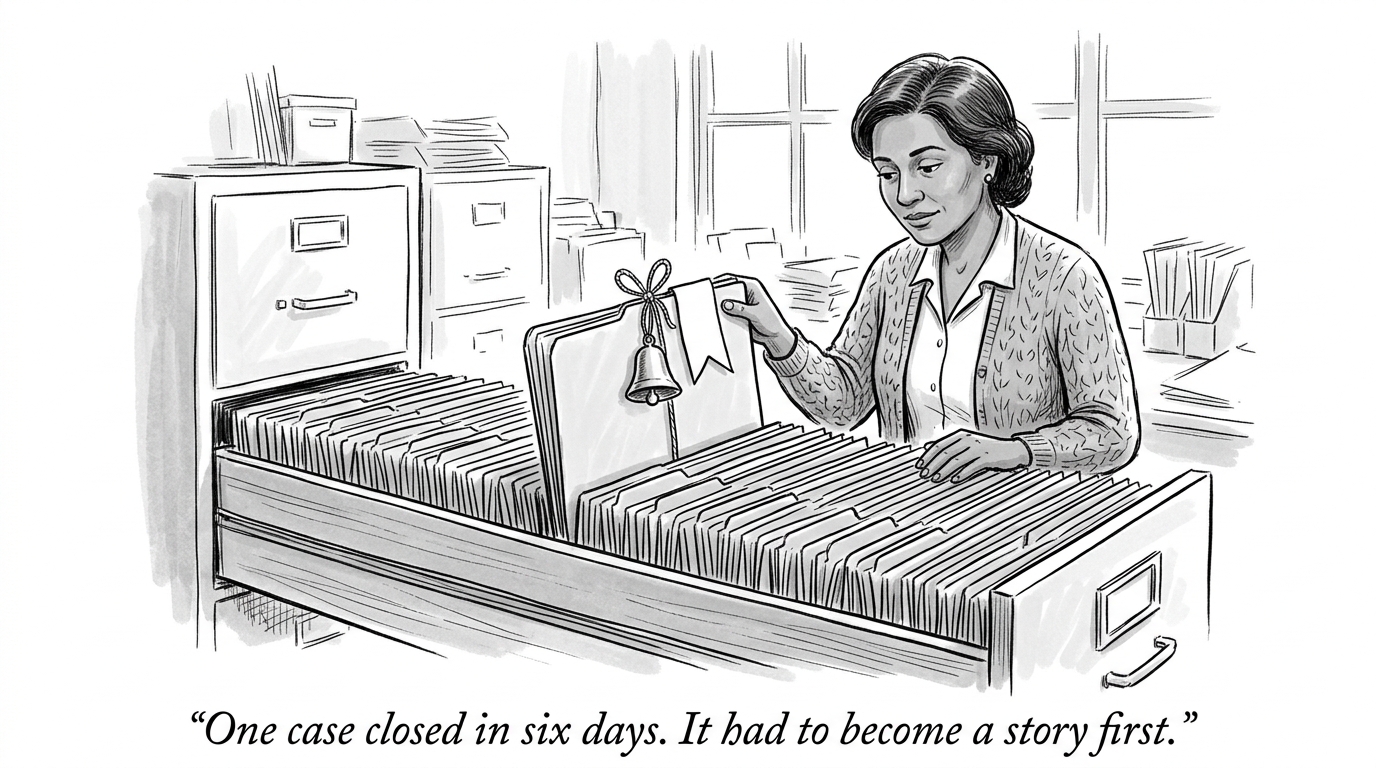
The Air Force opened a review. By September 4 -- six days after the post went viral -- the service confirmed it had finished reviewing her case and that her family had received all eligible benefits.[5] That is a real resolution, and it belongs in this account exactly as it happened: fast, and complete.
The part that doesn't resolve when one family's case does
Klinner's case closed in six days because it became a national story first. Seventeen other US service members have died in the same undeclared war, with 780 more wounded, and none of the rest are known to have had a Vice Presidential-level news cycle attached to their paperwork.[1] The mechanism that produced the Klinner family's initial classification problem -- a war with no formal declaration, running through a benefits system built to distinguish declared combat from everything else -- didn't get fixed by her resolution. Her individual case got fixed. The category error underneath it is exactly as open as it was on August 28, for every other family the same paperwork touches.
The actual claim, stated plainly. Whether Congress declares a war is a political choice, made for political reasons -- in this case, reasons this outlet has already covered: a declaration would trigger a legal approval process the administration has avoided.[2] But military benefits administration runs on legal classifications, not on what actually happened on the ground, and "was this combat" is one of those classifications. A political choice made in Washington about what to call a conflict becomes, several administrative layers downstream, a real question mark on a grieving family's paycheck. Public visibility is not a systemic fix -- it's a workaround that happens to work for whichever family gets enough attention to trigger a review. The families who don't post, or whose post doesn't travel, are left holding the same classification gap Klinner held on August 28, without the same six-day path out of it.
Why this doesn't reduce to a simple villain
The Air Force's own response deserves to be represented accurately: once the case reached them publicly, they moved in days, not months, and confirmed Klinner received everything she was owed. This isn't a story about a benefit flatly refused and never corrected. It's a story about a structural gap -- undeclared-war status creating real classification ambiguity in how combat benefits get processed -- that only closes, case by case, when a family has the visibility to force a review. The gap itself, not any single family's outcome, is the actual subject.
Why does this matter? A war fought without the word "war" attached to it doesn't just reorder oil prices and diesel costs at a Federal Reserve level, as this outlet has already documented.[2] It reaches all the way down to whether a specific family gets a specific paycheck on time, because the administrative machinery that pays out combat benefits was built to run on a legal category the government has deliberately chosen not to invoke. One family got theirs fixed in six days because their story became national news. The mechanism that made it a problem in the first place is still sitting underneath the other seventeen.
- Wikipedia, List of U.S. service members killed during the 2026 Iran war
- Ayni Analysis, A Strait 21 Miles Wide Carries a Fifth of the World's Oil... While Washington Won't Call It a War
- NOTUS, Air Force Probing Iran War Widow's 'Missing' Benefits
- Snopes, US airman's widow was allegedly denied benefits because Iran war is undeclared
- NOTUS, Iran War Widow Who Posted About 'Missing' Benefits Says Her Case Is Resolved