Someone Yelled "Fire" at a Striking Copper Miners' Christmas Party in 1913. There Was No Fire. 73 People Died on the Stairs Anyway, 59 of Them Children -- and No One Was Ever Charged.
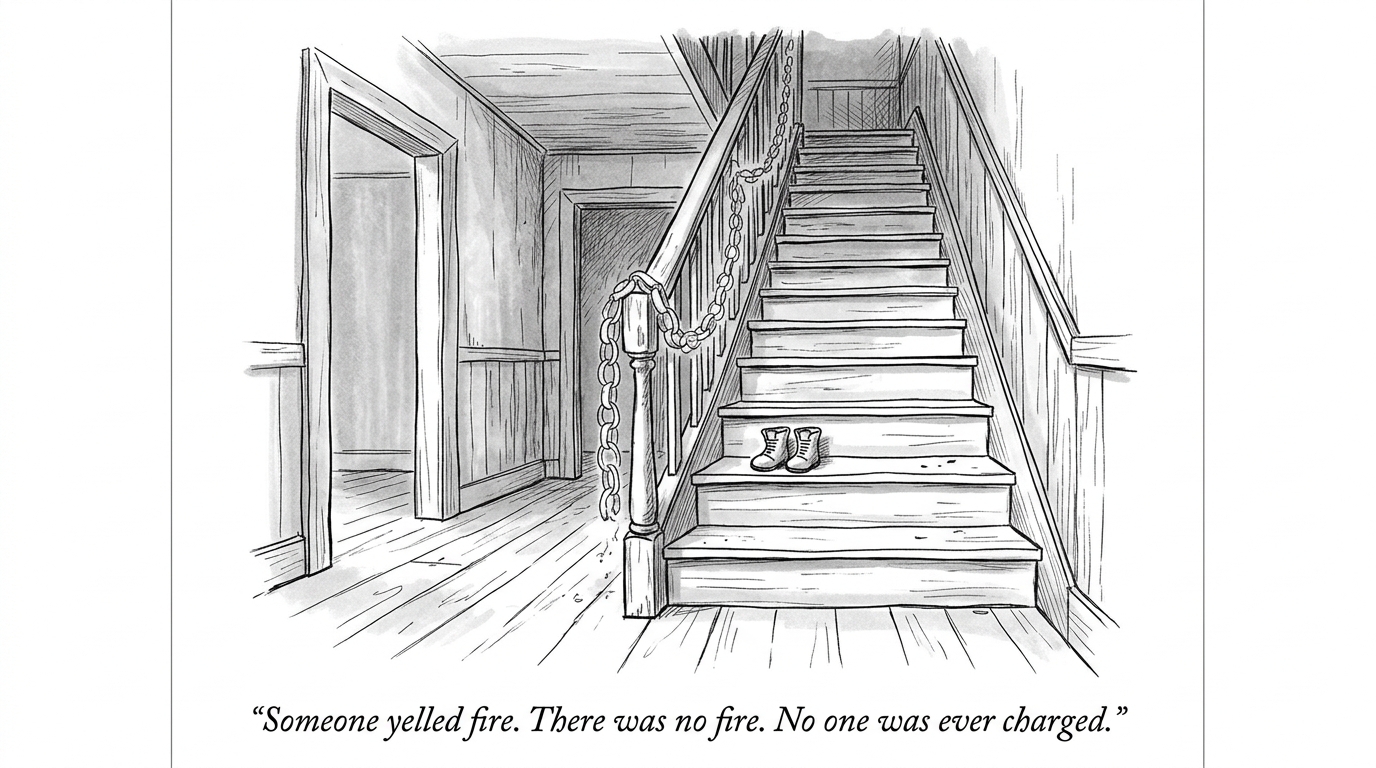
On Christmas Eve, 1913, in Calumet, Michigan, someone stood up inside a crowded hall and yelled "Fire." There was no fire. In the panic to reach the stairs, 73 people were crushed and suffocated to death -- 59 of them children.[1] Nobody was ever charged, and to this day nobody knows for certain who yelled it, or why.
The strike behind the party
Calumet sat at the center of the Copper Country, one of the richest native-copper deposits ever found, worked by the Calumet and Hecla Mining Company. By 1913, roughly 15,000 men worked the district's mines, and the Western Federation of Miners had organized about 9,000 of them into one of the longest strikes the region had ever seen -- demanding union recognition, safer conditions, and shorter days.[1] Italian Hall was hosting a Christmas party specifically to bring some relief to striking families, when the false alarm triggered the stampede.
The town itself has never agreed on what actually happened, and that unresolved dispute is part of the historical record, not a footnote to it. Woody Guthrie later wrote "1913 Massacre," a song accusing mine company men of holding the doors shut from outside -- an accusation the historical record has never been able to confirm or fully dismiss.[1] Whether it was a company operative, a panicked bystander, or someone else entirely, the alarm came from inside a labor conflict specific enough that no innocent explanation has ever fully satisfied everyone who lived through it.
Why does this matter? Michigan's Analysis coverage on this outlet has run entirely through Detroit and the auto industry. The Upper Peninsula -- separated from the rest of the state by the Straits of Mackinac, built on copper and iron rather than cars, home to people who call themselves Yoopers and mean it as a real, distinct identity -- has had none. This is its own defining event, not a regional footnote to Michigan's better-known story: the deadliest single incident in a labor conflict most of the country has never heard of, still unresolved more than a century later.
- Zinn Education Project, Dec. 24, 1913: Calumet Italian Hall Disaster