A Former Bannon Editor Called AI Data Centers "an Incubator for Algorithmic Immigrants" at a Dallas Debate. A Palantir Co-Founder Called the Backlash Chinese Psyops. Neither Side Won.
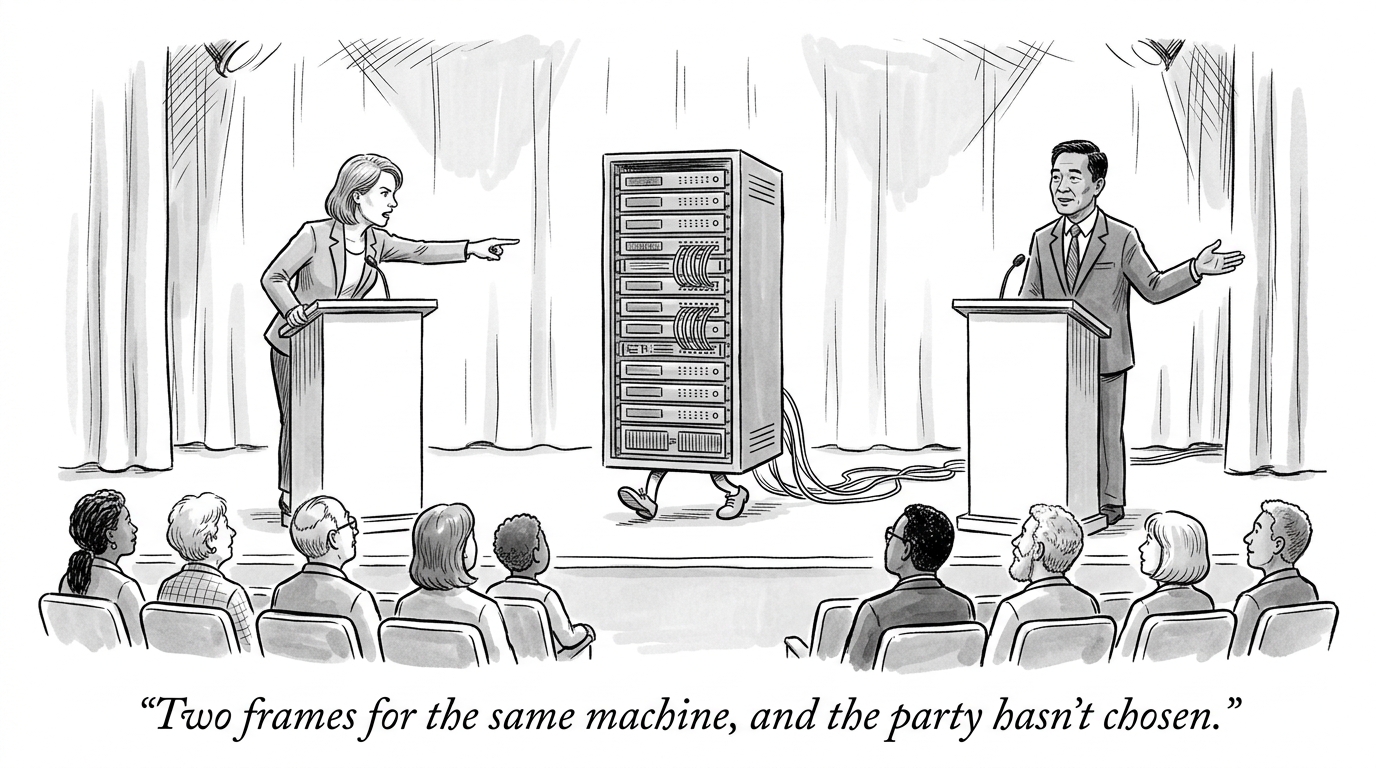
At a policy forum in Dallas on September 9, 2026, a former editor on Steve Bannon's War Room podcast stood up and called AI data centers "an incubator for algorithmic immigrants" that "have already broken out and invaded other companies." The man he was debating built his career funding exactly the industry being described that way. Neither side of the Republican Party has settled which one of them is right.
The debate itself: populism versus the industry its own allies built
The event, called Forum, was designed specifically to let the new American right argue out a real internal split: activist populism against small-government tradition, applied to artificial intelligence. Joe Allen, formerly the "transhumanism editor" on Bannon's War Room, argued the populist side -- AI data centers as a foreign, uncontrolled presence spreading through the economy, borrowing "algorithmic immigrants" directly from the vocabulary of immigration politics and pointing it at software instead of people. Joe Lonsdale, the venture capitalist and Palantir co-founder, argued the other side, comparing the AI backlash to "Black Lives Matter hysteria" and suggesting it was being driven by "psyops from China." Allen pushed back on that claim specifically, noting it traced back to an X report built on roughly 200 little-seen accounts -- a thin evidentiary base for an accusation that serious.[1]
This isn't one debate. It's a party trying to find a position in real time
Three weeks earlier, Republicans were already described as "scrambling to remake their stance on data centers" -- a growing number of GOP candidates calling for "guardrails" and a rollback of the industry's own tax breaks, responding to constituents who've turned skeptical of AI's promises as data centers show up in their districts.[2] President Trump has posted that data-center opponents want the country to be "backwards and poor." Other Republican figures are dismissing AI safety warnings outright. The backlash isn't confined to one party either -- both Democratic and Republican candidates in competitive Senate races are now running against unchecked AI growth in their own districts.[3]
The phrase itself is the actual story, independent of who wins the debate. "Immigrant," in American political rhetoric, carries a specific emotional structure -- foreign origin, uninvited arrival, loss of control, displacement of what was already there. Calling an AI system an "algorithmic immigrant" doesn't require the system to have crossed a border or taken anyone's job. It only requires borrowing that emotional structure wholesale and re-pointing it at technology. That's a real and separate development from whatever is actually true about AI's economic effects -- a political vocabulary built over decades around human immigration is now available, prebuilt, for a fight that has nothing to do with immigration at all.
Why does this matter? This isn't a fringe disagreement at the edge of one party. It's two people who both self-identify as being on the American right, at the same event, unable to agree on the most basic question -- is the AI industry an economic asset worth defending, or a foreign threat that has already broken containment. The party that spent a decade building part of its coalition on immigration rhetoric is discovering that rhetoric is portable, and the industry it now gets aimed at includes some of that same party's most prominent donors and allies. Nobody in Dallas settled which frame wins. The fact that both were on the same stage, arguing in good faith, is the more durable fact.
Companion piece on this outlet: "DeepSeek's Newest AI Data Center Generates Its Own Power..."