Who Paid
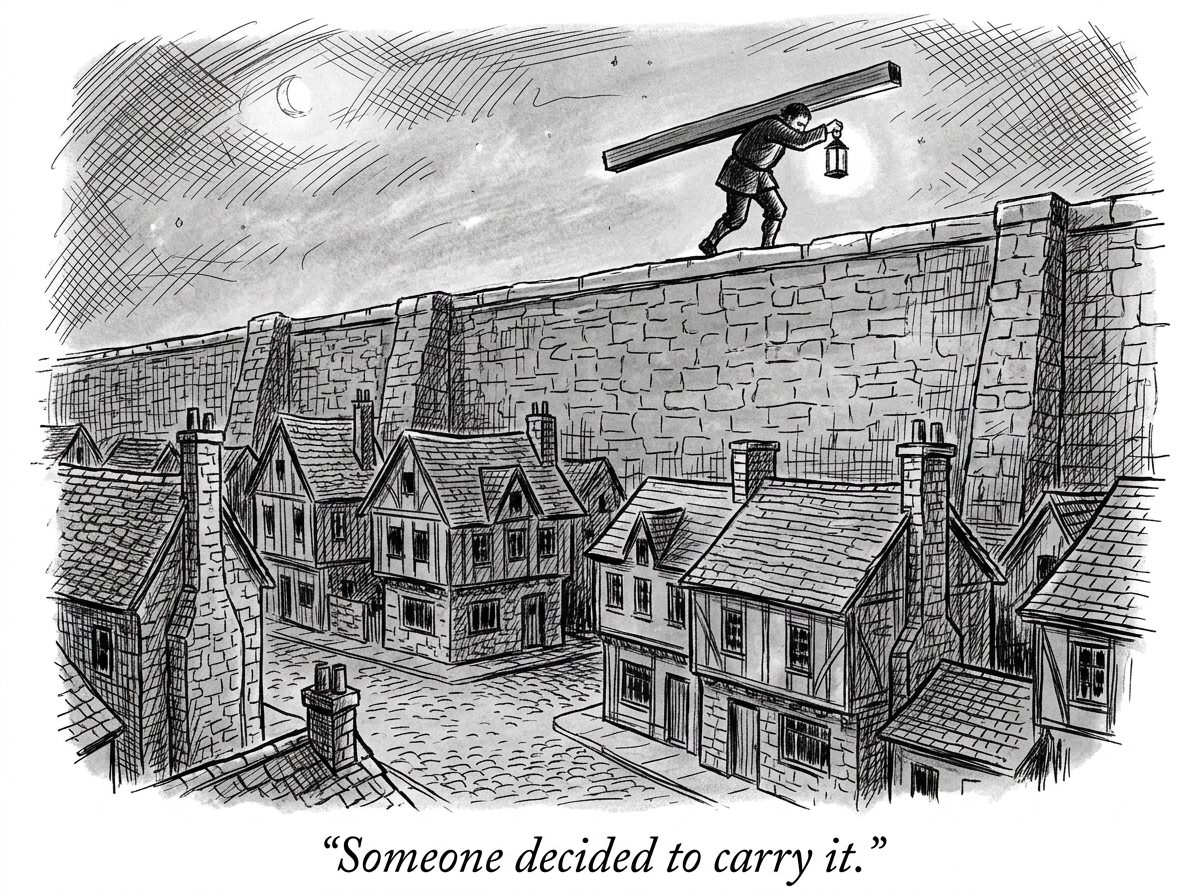
Two former intelligence officers were convicted of crimes connected to their work, in two countries, for opposite reasons.
Before I go on, you should know where I stand. I know Jeff Castelli personally. I worked with the CIA through In-Q-Tel. I am not neutral here.
What the record shows
One of them spoke. John Kiriakou worked at the CIA from 1990 to 2004. In 2007 he told ABC News that the agency had waterboarded detainees, and he called it torture.[1][2] In 2012 he pleaded guilty to one count of disclosing the identity of a covert agent, and in January 2013 he was sentenced to thirty months in prison.[3][4] The sentencing judge did not accept that he was a whistleblower. She called him a man who betrayed a solemn trust.[3][4]
The other one acted. An Italian court convicted Jeff Castelli, the CIA's former station chief in Rome, over the 2003 abduction of a cleric named Abu Omar from a street in Milan. Abu Omar was taken to Egypt, where he says he was tortured, and he was released without charge in 2007.[5] A lower court had acquitted Castelli on grounds of diplomatic immunity. In February 2013 the appeals court in Milan reversed that and sentenced him in his absence to seven years.[6] Italy's highest criminal court upheld the convictions of three CIA officers, Castelli among them, in 2014. Human Rights Watch reports that Italy never sought to extradite the Americans.[5]
I am not arguing here about whether either man was right. A court decided each case, and you can read what it decided. I am pointing at what they have in common.
What I read in it
I read both paths as the cost of the work. Nobody drifts into this work. People choose these careers, and I believe they choose them because they love their country and want it to be safe. That is my reading of their motive, not a finding about those two men, and I cannot source anyone's motive from the public record. Kiriakou's own account is the nearest I can offer: in a recent podcast interview he said he loves this country "more than anything else in the world" and wanted to do the right thing.[7] My own closeness to this work is a reason to say so plainly. The work also chooses the people. This community suited my disposition.
Here is the claim. A country is kept safe by people who take the weight of hard decisions on themselves, and some of them pay for it. A few pay with their freedom. The rest of us sleep. They did not all decide to pay. John Kiriakou chose to speak, and says he would do it again.[10] Jeff Castelli, in my view, did his job and paid anyway. What they share is the work. That is love of country, and it is also civics, because civics is the study of who carries what for whom.
The cost is not only the sentence at the end. The surveillance detection route is another part of it: a planned path of turns and stops, taken to learn whether someone is following.[8][9] It is mirrors, driveways, cover names, burners, dead drops. It is how people in that world live.
The limit on the claim
Sacrifice is not a license. The people who ran the FBI's programs against the civil rights movement also believed they were protecting the nation, and the companion piece to this one looks at what that cost the country. If we judge people only by their motives, we cannot tell the officer who bears a cost for us from the official who spends our rights for us. The check on that has to come from the people the nation is for.
What I do not know
I do not know what either Kiriakou or Castelli intended, or whether either would describe his path the way I did. The record shows what each did and what each was convicted of. It does not show why. Sources differ on the exact timeline of Castelli's acquittal and reversal.
What it comes to
We teach children that the country belongs to them. The lesson includes the people who carry weight for them, so that they know who those people are and what it cost them.
- Government Accountability Project, John Kiriakou, biography, including the 2007 ABC News interview (Government Accountability Project)
- Wikipedia, John Kiriakou, biography, including the 2007 ABC News interview (Wikipedia)
- U.S. Attorney's Office, Eastern District of Virginia, Plea, sentence and the judge's remarks (U.S. Attorney's Office, Eastern District of Virginia)
- NBC News, Plea, sentence and the judge's remarks (NBC News)
- hrw.org, Human Rights Watch, "Italy Stands Alone on Justice for CIA Abuses" (2014) (hrw.org)
- Jurist, Italy court convicts three Americans (Feb. 2013) (Jurist)
- The Diary Of A CEO (YouTube), CIA Whistleblower John Kiriakou: They Can See All Your Messages! (podcast episode, at 1:36:22)
- Circuit Magazine, Counter surveillance: definitions of surveillance detection and counter-surveillance (a security-industry source, not government doctrine)
- SpotterUp, Surveillance detection routes: a key tool in security operations (a security-industry source, not government doctrine)
- The Diary Of A CEO (YouTube), CIA Whistleblower John Kiriakou: They Can See All Your Messages! (podcast episode, at 0:50)