The Cost of Going Public
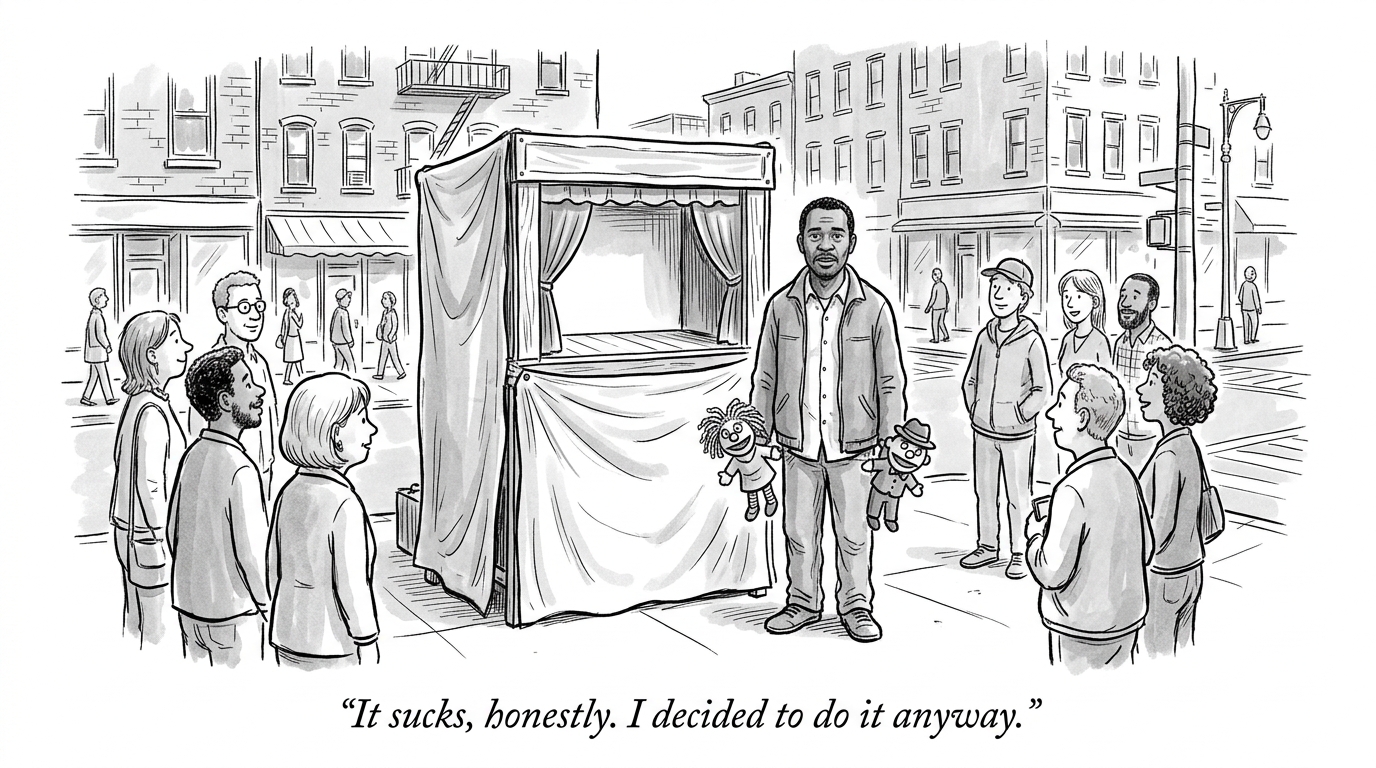
I just finished deciding something. I'm putting my own name on work I used to let a site carry for me, and I don't want the attention that comes with it. It sucks, honestly. I decided to do it anyway, because the work is real, and that decision is small compared to what some other people have actually paid to say something out loud. I wanted to look at a few of them honestly, without flattening all of it into one lesson about courage, because it isn't one lesson. There are at least two different things happening here, and they cost different people different amounts.
The first kind of cost is paid by someone telling a true thing that powerful people wanted left unsaid, and the backlash is the establishment protecting itself.
Anita Hill testified in front of the Senate Judiciary Committee in 1991 that Clarence Thomas had sexually harassed her when she worked for him. She had nothing obvious to gain and a great deal to lose, and she lost a version of it -- public scrutiny of her own character, sitting senators questioning her credibility on national television, years of being defined by one afternoon of testimony instead of the rest of her actual career. What she said also changed something real in how this country talks about harassment at work, whether or not the vote that day went the way she was hoping. The cost was hers. The benefit went well past her.
Daniel Ellsberg copied the Pentagon Papers and gave them to the press in 1971, proving the government had known for years that the Vietnam War was likely unwinnable while continuing to send people to fight it anyway. He was charged under the Espionage Act, faced real prison time, and the charges only got dismissed because of government misconduct in his own prosecution, not because anyone decided he'd been right to do it. He paid with his career and years of legal jeopardy for handing the public a truth the government had already decided the public didn't need.
James Baldwin wrote Giovanni's Room in 1956, a novel with an openly gay relationship at its center, at a moment when that alone was a real risk -- to his career, to how white America already found reasons to dismiss him, and even to how some of his own allies in the civil rights movement received it. Some worried openness about his own life would be used as a weapon against a movement that needed to look a certain way to be taken seriously. He wrote it anyway. The cost there wasn't hypothetical either.
None of these three people were rewarded on the spot for what they did. Hill was attacked in real time. Ellsberg was prosecuted. Baldwin was, in part, second-guessed by people on his own side. That's the shape of the first kind of cost: pay it alone, up front, for a truth that only pays other people back later, if it ever does.
That kind of cost isn't only historical. I listen daily to a political commentary podcast run by a married couple, Jesse Dollemore and Brittany Page. Both of them have received death threats over commentary they deliver publicly, under their own names, every day. I'm not naming this to score a point for whichever side of the argument they're making -- people making arguments on every side of American politics have received threats like this, and picking one direction to call out would be its own kind of dishonesty about what's actually happening. I'm naming it because it's the plainest, most current proof I have that the first kind of cost in this piece was never only a historical category. Two people I listen to are paying it right now, in real time, for doing nothing more than talking.
The second kind of cost is a different shape entirely, and it's the one I actually find harder to sit with, because it isn't about truth-telling against power. It's about a person asserting a position a lot of other people consider actively harmful, and an audience deciding not to fund it anymore.
Orson Scott Card wrote against gay marriage, on his own blog and elsewhere, for years. In 2013, DC Comics dropped him from a Superman story after the backlash reached a point they couldn't absorb. He said something he apparently believed needed saying, and it cost him a real, specific, named piece of his own readership. J.K. Rowling's public positions on transgender issues, starting around 2019 and continuing since, cost her a large and vocal part of her former fanbase's goodwill -- some of the actors from her own films publicly distanced themselves from her. Her books still sell. The relationship a lot of former readers have with her does not look the way it used to.
Here is the part that actually made me want to write this instead of just noticing it, and I want to state it as two separate, clean things rather than one blurry one. Both of these men are in my own library, and their work is beautiful. No question there. Ender's Game is real, formative reading for me. My kids and I have watched the Harry Potter movies together, more than once, the way families do. That is one true thing, stated fully, with nothing subtracted from it.
The other true thing is that their personal positions are complicated for me, and this isn't a tension I discovered this week. I have held both of these at once for decades -- Card's own record on this goes back well before that one Superman story ever made headlines; Rowling's has been part of the picture since 2019. The work never stopped being beautiful. The complication never resolved either. I didn't wish either of them had stayed quiet -- that was their call to make, the same way publishing under my own name was mine. I wished, and still wish some days, that I had never learned what either of them actually believes, because now I can't watch those movies with my kids, or reread that book, without also holding the thing I learned about the person who made them. Nobody forced that cost onto Card or Rowling. It landed on me, a total stranger to both of them, just for having read and watched their work before I knew, and it has stayed landed for a long time now, not lifted, not resolved, just carried.
That's the piece of this nobody talks about when they talk about "the cost of speaking your mind." Category one -- Hill, Ellsberg, Baldwin -- the cost lands on the person who spoke, for telling a truth someone else didn't want told. Category two -- Card, Rowling -- the cost lands in two places at once: on the person who spoke, in lost readership and lost goodwill, and on people like me, who now carry a small, permanent asterisk on something that used to be uncomplicated. I don't think those two costs cancel each other out or prove each other wrong. I think they're just different, and pretending they're the same kind of bravery, or the same kind of consequence, would be lying about both of them to make a cleaner story.
I don't have a tidy way to close this, and I've stopped expecting myself to find one every time. Hill, Ellsberg, and Baldwin paid a price I respect without reservation. Card and Rowling paid a price I understand without fully forgiving, and I paid a smaller, stranger price of my own just for having loved their work before I knew what else came with it -- a price I'm still paying, years later, every time one of my kids wants to watch the movies again. My own decision this week -- to put my name on what I write instead of hiding behind a site -- costs me something real too, and it is nowhere near the size of any of the five costs above. I know that. I still didn't want to write about the others without admitting where I actually stand, which is: glad some people paid what they paid, sorry others did, and a little sorry, in a much smaller way, that I ever had to find out at all.
Part of the same family: "How to Build a Mind", "The Pleasantville Year," and "Grace and the Vote."